Disease
The Importance of Community Awareness in Controlling Infectious Disease Outbreaks
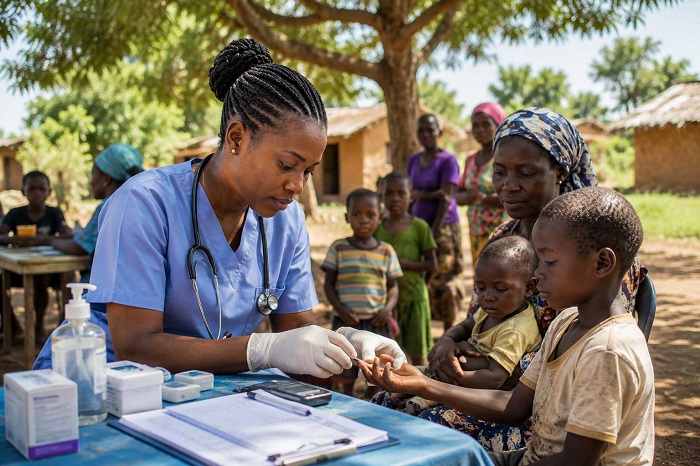
When a novel pathogen begins to circulate, public attention naturally gravitates toward centralized institutions: research laboratories racing to sequence genetic material, intensive care units expanding bed capacity, and federal agencies coordinating supply chains. These clinical interventions are indispensable, yet they represent secondary and tertiary responses to an ongoing crisis. The true primary frontline of any epidemic exists far outside clinical settings. It takes shape in living rooms, municipal transit systems, grocery store aisles, and local workplaces.
Infectious diseases propagate through human interaction, which means their transmission pathways are dictated by human behavior. Long before pharmaceutical therapeutics can be developed, tested, and distributed at scale, the only reliable barrier against rapid transmission is an informed, proactive public. Cultivating widespread community awareness is not merely an auxiliary public relations exercise; it is an active, foundational component of outbreak containment.
Translating Clinical Data into Everyday Decisions
A central challenge during an outbreak is the persistent divide between high-level epidemiological guidance and the daily realities of individual citizens. Public health bulletins frequently rely on technical terminology—reproduction numbers, viral shedding windows, and aerosol dynamics—that rarely translate into intuitive, actionable habits for people juggling employment, caregiving, and daily logistics.
Effective community awareness bridges this gap by turning complex epidemiological realities into practical, contextualized decisions. When community members understand the specific mechanics of transmission—such as the difference between surface contamination and fine aerosol dispersion—their protective measures become purposeful rather than performative. Instead of engaging in low-impact routines, people can prioritize high-impact practices:
-
Improving indoor air circulation through cross-ventilation and mechanical filtration.
-
Recognizing subtle prodromal symptoms before significant viral shedding occurs.
-
Choosing high-filtration respirators over ill-fitting cloth coverings in dense public venues.
-
Choosing voluntary isolation at the very first onset of illness rather than waiting for formal laboratory confirmation.
When individuals understand the biological rationale behind these interventions, compliance ceases to feel like arbitrary external coercion. It becomes an intentional calculation aimed at breaking chains of transmission at the neighborhood level.
Countering the Information Vacuum and Mitigating Panic
Outbreaks inherently generate uncertainty, and uncertainty creates fertile ground for anxiety, speculation, and misinformation. When official communication is delayed, overly opaque, or dismissive of public concern, communities inevitably experience an information vacuum. In the digital era, that vacuum is quickly filled by unverified assertions, sensationalized media, and opportunistic remedies that can cause direct physical harm or foster unwarranted complacency.
Proactive community education serves as an informational anchor. Transparent communication does not mean projecting false certainty; rather, it involves clearly communicating what is currently known, acknowledging existing unknowns, and explaining the scientific rationale behind evolving recommendations.
Furthermore, the messenger matters just as much as the message. While federal guidelines establish the baseline standard, information is often received with greater credibility when delivered by familiar local figures:
-
Primary care physicians and pediatricians who have established long-term relationships with local families.
-
Faith leaders, neighborhood association heads, and community organizers who understand regional cultural nuances.
-
School administrators and labor organizers who can tailor health protocols to the specific operational constraints of their facilities.
When accurate, pragmatic information originates from trusted community sources, it demystifies the crisis. It replaces reactionary panic with organized, measured vigilance.
Accelerating Early Detection and Reducing Healthcare Strain
In the arithmetic of epidemic control, time is the single most valuable resource. Exponential growth means that an outbreak addressed in its initial generation of spread requires exponentially fewer resources than one allowed to reach broad community transmission.
An educated public serves as an organic, decentralized surveillance network. When citizens are taught to recognize the specific constellation of symptoms associated with a circulating pathogen, they present for diagnostic testing much earlier in the disease course. Early detection yields two critical benefits:
-
Targeted containment: Individuals can immediately isolate themselves and notify close contacts, severing subsequent links in the transmission chain before secondary cases emerge.
-
Clinical triaging: Public education clarifies when symptoms can be safely monitored at home and when they warrant urgent clinical evaluation.
This triaging function is essential for preserving the operational capacity of acute care systems. During seasonal surges and novel epidemics alike, emergency departments are routinely overwhelmed by the “worried well”—individuals seeking reassurance or mild symptomatic relief—alongside severely ill patients requiring intensive respiratory support. Comprehensive public awareness guides people toward appropriate levels of care, such as outpatient clinics, pharmacy-based testing, and telehealth consultations, thereby keeping emergency corridors accessible for critical cases.
Protecting Vulnerable Populations Through Civic Solidarity
No community experiences an outbreak uniformly. Pathogens exploit structural vulnerabilities, consistently exacting the highest toll on older adults, immunocompromised individuals, and service workers whose livelihoods preclude remote work.
A high level of community awareness shifts the public mindset from individualized risk assessment to collective responsibility. When young, healthy individuals view prevention solely through the lens of personal vulnerability, they may conclude that the statistical risk to their own health is negligible. However, when community messaging emphasizes how mild or asymptomatic transmission can inadvertently imperil high-risk neighbors, preventative measures transform into an act of civic duty.
This collective orientation often sparks vital grassroots support systems, including:
-
Mutual aid networks that handle grocery and prescription deliveries for quarantined households.
-
Community-organized transportation for mobility-impaired residents requiring vaccination or clinical care.
-
Neighborhood-level advocacy ensuring that non-English speakers and historically underserved populations receive health alerts in accessible languages and formats.
An outbreak cannot be successfully managed if protective strategies only reach those with the socioeconomic flexibility to insulate themselves. Broad community awareness ensures that protective measures encompass the entire demographic fabric of a city or town.
Institutional Trust as Vital Public Health Infrastructure
The efficacy of any public health protocol ultimately rests on public trust. Diagnostic tests, preventive therapeutics, and behavioral guidelines are useless if the public refuses to adopt them. Crucially, trust cannot be constructed during an emergency; it must be built, maintained, and respected during periods of calm.
Public health communication builds trust when it treats the public as an intelligent partner in disease mitigation rather than a passive audience to be managed. This requires an honest accounting of how recommendations are formulated, candid admissions when empirical evidence changes, and respect for community concerns. When civic awareness programs prioritize clarity, empathy, and consistency, they establish a reservoir of social capital that can be drawn upon whenever a biological threat emerges.
Modern medicine provides the technological weapons to combat infectious threats, but human behavior decides the outcome on the ground. By investing in comprehensive, continuous community education, society transforms an otherwise vulnerable population into an informed, resilient frontline defense capable of containing outbreaks before they escalate into catastrophes.