How to Store Organic Ginger Powder to Maintain Freshness
A pinch of ginger powder can give you warmth in the winter season, and provide your chai with the right amount of spice, bring your stir fry to life and whatnot. This potent botanical treasure can be just the thing to give your potent wellness benefits.
But improper storage can destroy all its volatile oils and healthy compounds. So, here is a guide to help you get the most of your organic ginger powder from Oils and Herbs.
Why Proper Storage Matters for Organic Ginger Powder
The aroma and taste of ginger stems comes from its essential oils. Poor storage leads to destruction of the essential oils mainly through four factors:
- Moisture: Dry powders are hygroscopic. Moisture can result in caking and creates breeding ground for bacteria.
- Air Exposure: Aromatic compounds interact with air. The longer you leave it open in the air, the longer the peppery zest disappears.
- Heat: High temperatures lead to evaporation of volatile oils. This alters its therapeutic properties.
- Light: UV days break down active antioxidants, which reduces its flavours.
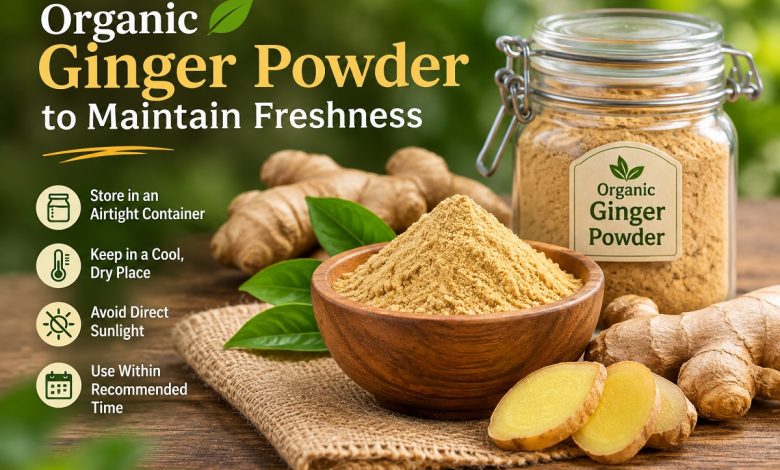
1. Store Organic Ginger Powder in an Airtight Container
Oxygen and moisture are the biggest culprits when it comes to stale spices. So, the first thing you can do is shift the ginger stems in an impervious vessel.
What kind of container can you choose?
- Glass jars that are coloured amber, cobalt, or have UV protection can be the finest vessel.
- BPA free, high density plastic containers or metal spice tins with fitted clamp lids.
- If your product comes in a heavy duty foul pouch with zip lock then keeping it in the original packaging can also work.
2. Keep Ginger Powder in a Cool and Dry Place
The next step is to keep your container in a cool dark space. This can be your spice cupboard, or closed larder away from high culinary zones. An ambient temperature of 15°C to 20°C works great for your stems.
3. Protect Ginger Powder from Moisture
Keep your ginger powder as away from moisture as possible. Refrain from putting the powder directly over steaming pots. This steam can settle on the rim as well as inside the container. Always take out powder from your jar using a clean and dry spoon, away from boiling pans.
4. Avoid Direct Sunlight and Excessive Heat
Spice racks right next to your stove, on top of the oven, or sitting out on a sunny windowsill might seem enticing, but they actually ruin your spices. Do your spices a favor, stash those jars behind solid cupboard doors so they’re safe from sunlight and all the steam that comes with cooking.
5. Should You Refrigerate Organic Ginger Powder
In most cases, it’s a no. Keeping dried spice powders in your refrigerator actually works against you. Imagine this: every time you grab a jar from the cool fridge and set it back after exposure to a warm kitchen, you unleash a cycle of interior condensation. That hidden moisture? It quickly leads to messy clumps and skyrockets the chance of spoilage. For lasting freshness and vibrant flavor, a dry, steady pantry is your unbeatable choice.
6. How Long Does Organic Ginger Powder Stay Fresh?
If you keep your dried ginger powder in a cool, dry pantry, it’ll smell and taste its best for about 1 to 2 years. After that, it won’t actually go bad, but you’ll start to notice that its flavor and those good-for-you perks start to fade away.
| Storage Condition | Effect |
| In an airtight container and cool dry pantry | Preserves aroma and flavour |
| Container is opened frequently or left open for longer hours | Faster loss of aroma |
| Exposure to deterrents | Degeneration of flavour |
| Contact with moisture | May result in clumping and spoilage. |
| Not properly sealed packaging and humid environment | Greater exposure to moisture and air |
7. How to Tell If Ginger Powder Has Lost Its Freshness
Before you add that powder to your recipe, it is important to do a smell check:
- Take a deep inhale. Fresh ginger powder smells peppery and warm. If there is faint or no scent, it may have gone bad.
- Fresh ginger powder has a pale light sandy hue, whereas washed out greyish tinge means there is some photo degradation.
- Check if there are rock solid or sticky patches in your powder. Normal powder has crumble clusters only.
8. Common Mistakes to Avoid When Storing Ginger Powder
- Leaving the lid open: Failing to tightly close the lid exposes the contents to air and causes immediate oxidation.
- Using a wet spoon: Even a small drop of water adds moisture, which can spoil the whole jar.
- Storing it near the stove: Heat from stovetops and ovens quickly breaks down gingerols.
- Buying more than you need: The freshest organic botanicals should be used within 6 to 12 months after opening. It is better to purchase smaller amounts more often, instead of large jars that remain unused.
- Ignoring the packaging instructions: Always follow the recommended best-before dates and the storage guidelines given by your botanical supplier.
- Mixing new powder with old powder: Adding new powder to a partly used jar introduces older, oxidized particles into the fresh batch.
9. Tips for Maintaining the Quality of Organic Ginger Powder
- The Two Jar Method: You can keep a small jar of ginger powder within your reach and the main reserve somewhere proper and sealed.
- Label with Dates: You should add the date of opening on the base of the jar.
- Use Opaque Tins or Amber Glass: Getting rid of light penetration is the safest way to increase shelf life.
Conclusion
Pure organic ginger powder from Oils and Herbs when handled properly by avoiding unnecessary mistakes can change your daily recipes. It provides wonderful taste and aroma from its first shake to the last speck.